Today on Travel Tuesdays we look at a centuries-old pilgrimage destination: Santiago de Compostela in Spain, which is the final stop on the pilgrimage path called Camino de Santiago, “Way of St. James” pilgrimage path. The journey involves making your way on foot along a marked route path that crosses rivers, mountains and many countries, culminating in a visit to the tomb of St. James inside the Cathedral of Santiago de Compostela.
BTW, a quick note about names. Spanish Santiago = English James. The name of the Cathedral in English is St. James Cathedral, but the town is always Santiago de Compostela, not Jamestown. Go figure.
Anyway, this has been a route for pilgrims since the 9th century, and it is quite popular even today as a hiking route, even for the less-faithful. Many legends and mystical properties are attributed to St. James and what he did to help pilgrims along the way, of course. Perhaps you remember the chicken story from Tübingen? The 12th century family in that tale was doing the Jakobsweg pilgrimage (Jakob being German for James), and it was on the parents’ way back from Santiago de Compostela that the miracle of the chicken occurred.
But I digress. Chris and I spent a day in Santiago de Compostela in June, traveling overland by train all the way from San Sebastian (in the northeastern part of Spain to Santiago de Compostela (in the northwest). It was a long day-long train ride, which was adventure enough for me; we only walked less than perhaps a half-mile from our hotel in town to get to the church itself. But there are people who do the pilgrimage today on foot, and you see them strolling around town with their walking stick, as one of the ways St James is always pictured is with a big walking stick.
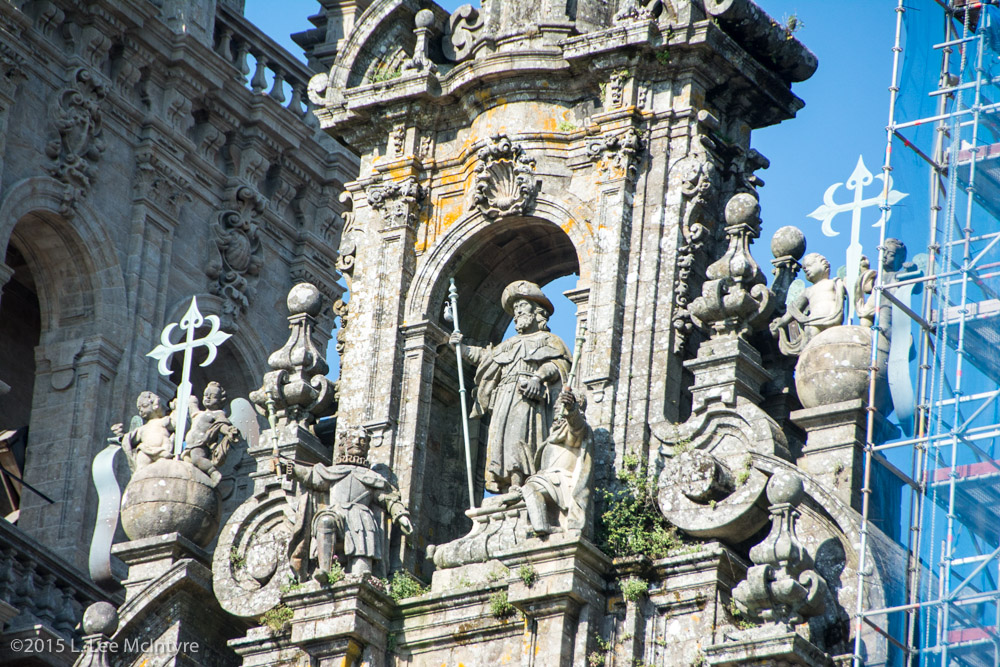
St. James atop the Santiago de Compostela Cathedral
You don’t have to walk the entire route all at once. Rather you can spread the journey out and do it in chunks over a series of years. We have friends in Italy, in fact, who have done just that.
No matter where you start or what countries you go through, all paths lead to the tomb of St. James in Santiago de Compostela. According to Wikipedia, this idea of paths converging is a possible explanation of why a scallop shell is used to symbolize the Way of St. James, is it as many lines leading to a single point.
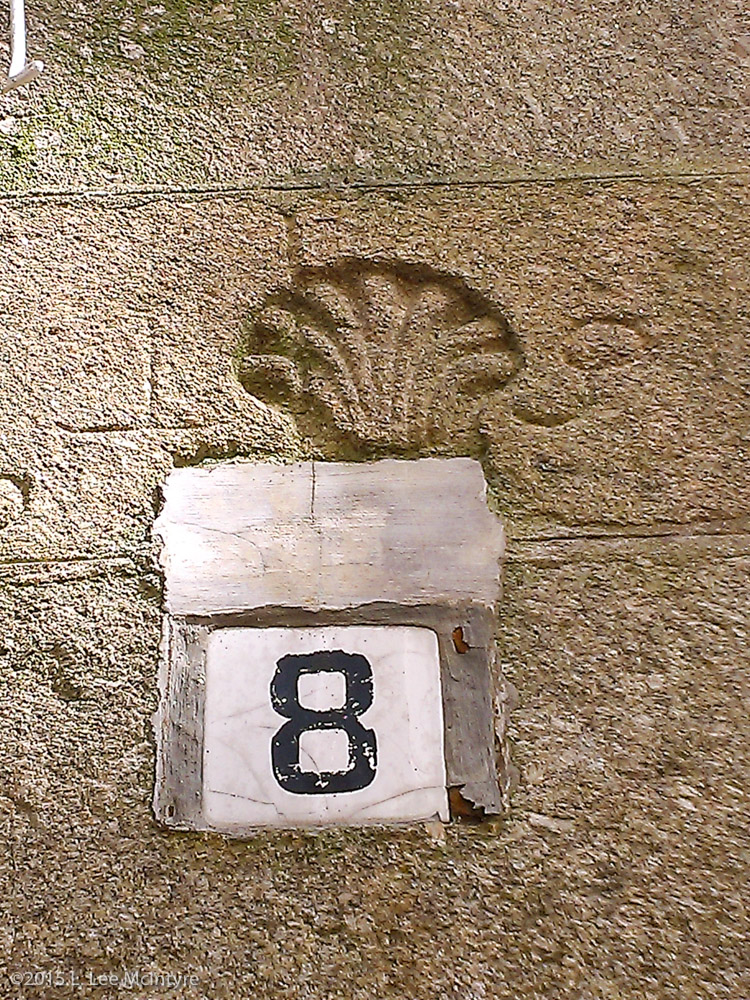
Symbol of St. Santiago (on building)

Symbol of St. Santiago in the street
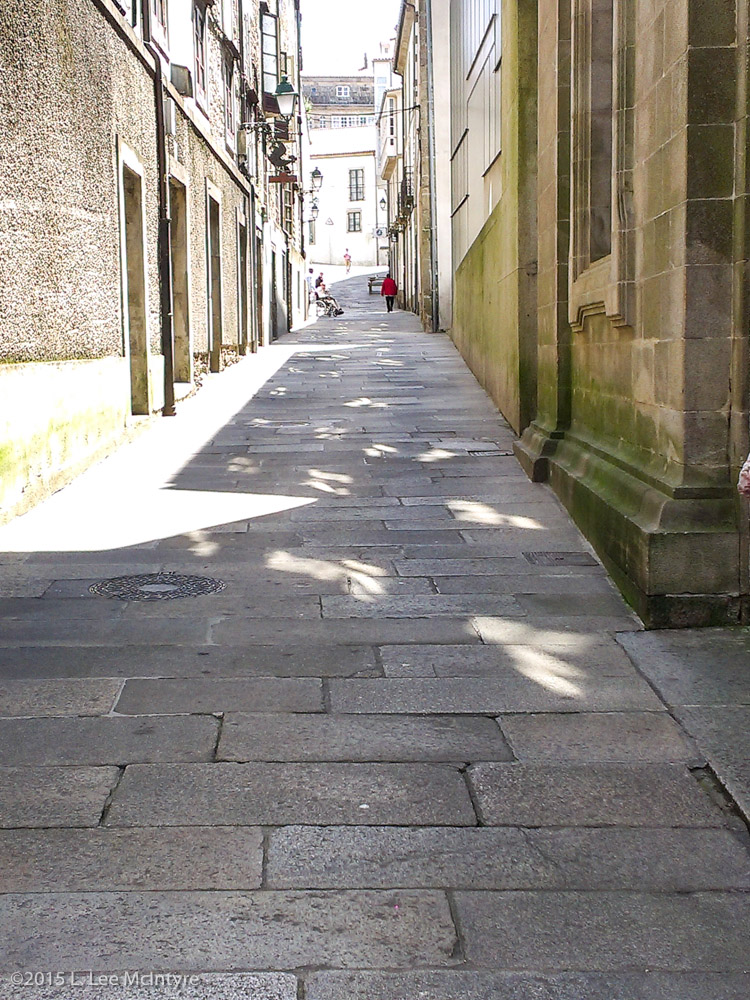
The town overall was not quite as quaint as I’d hoped, as most of the side streets leading from the hotels are populated with souvenir stalls and cheap trinket shops. This one did have some nice light and shadows, at least:
The Cathedral itself is, of course, what you come to the town to see. It is an impressively large building, currently being renovated. The resulting scaffolding on both the main entrance and one of the two towers isn’t that picturesque at the moment, but the the photos below will at least give you a sense of the cathedral and the variety of carved figured on the outside of it that have greeted Catholic pilgrims and other tourists for a long, long time.
P.S. The Washington Post had a interesting article on what tips were given to travelers in medieval times; since there are several tips mentioned for traveling to Santiago de Compostela, I thought I’d pass along a link to the article here. Enjoy both that article, as well as my photos below from the Cathedral de Santiago de Compostela.

Santiago de Compostela Cathedral – photo #1

Breakfast near the cathedral – note that huge croissant!
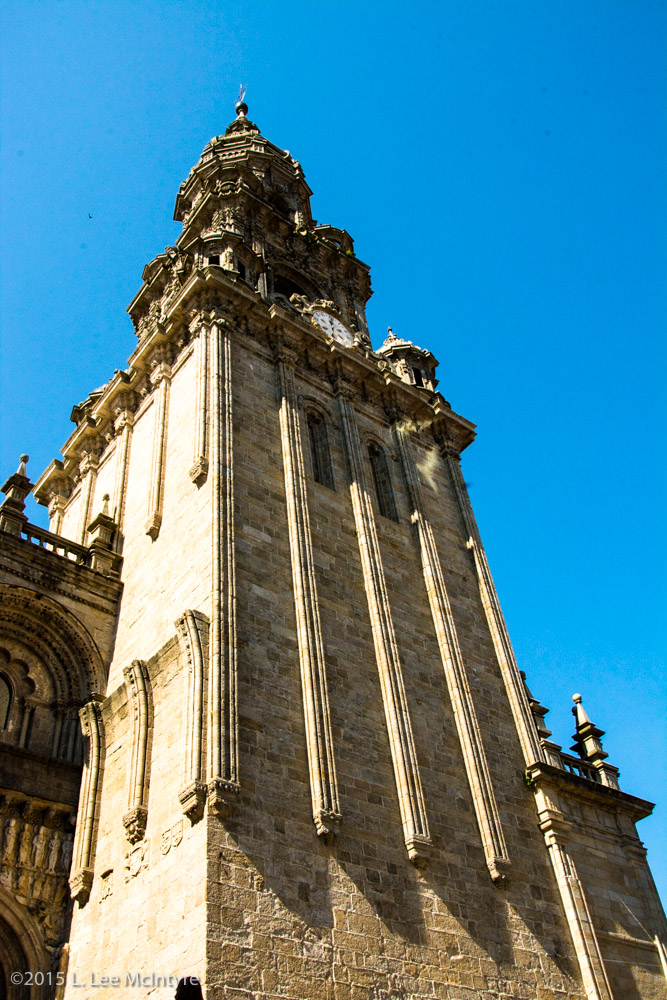
Santiago de Compostela Cathedral detail – photo #2
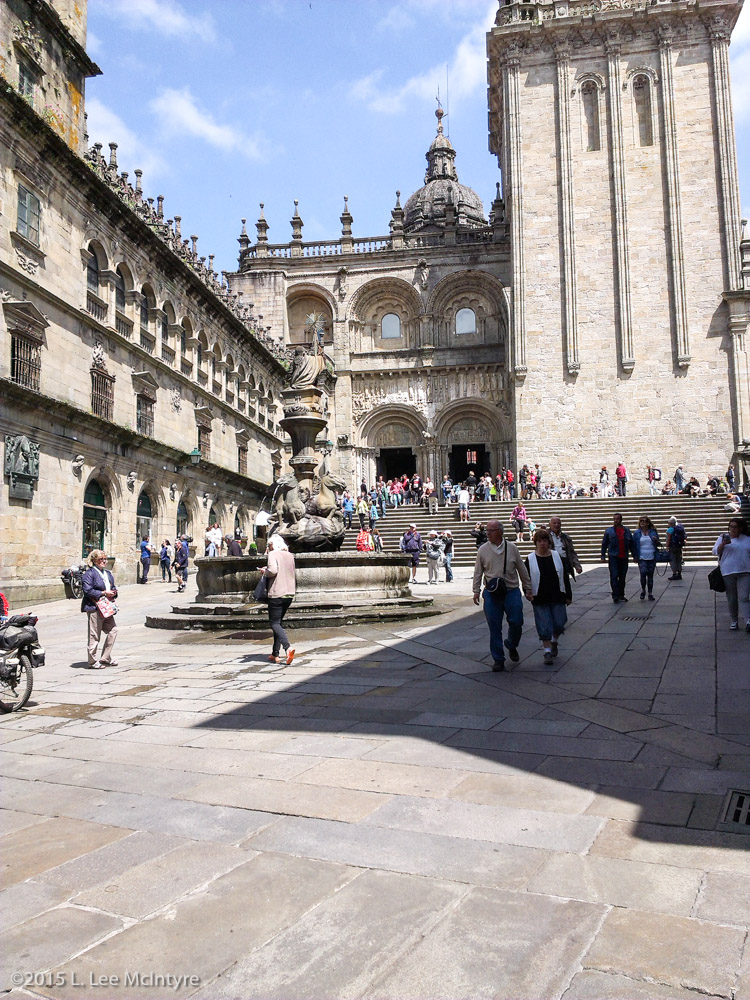
Santiago de Compostela Cathedral detail – photo #3
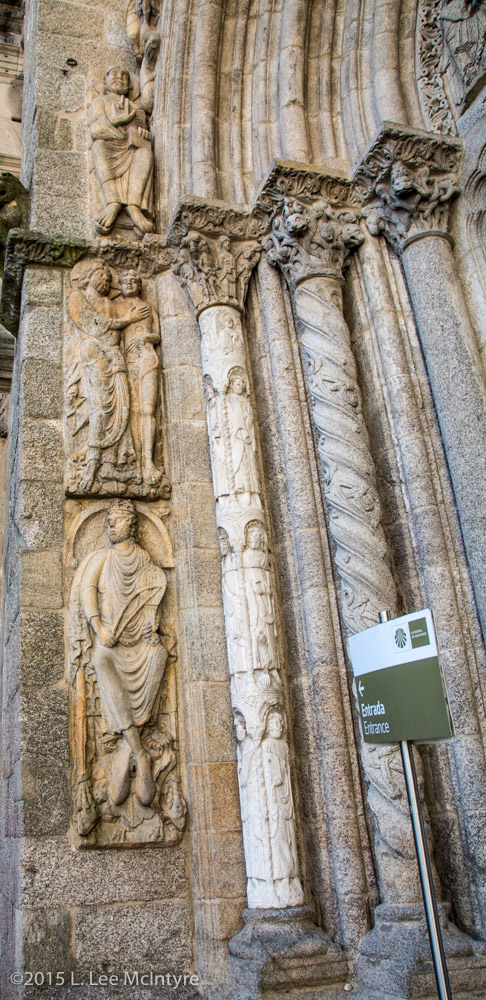
Santiago de Compostela Cathedral detail – photo #4

Santiago de Compostela Cathedral detail – photo #5

Santiago de Compostela Cathedral detail – photo #6
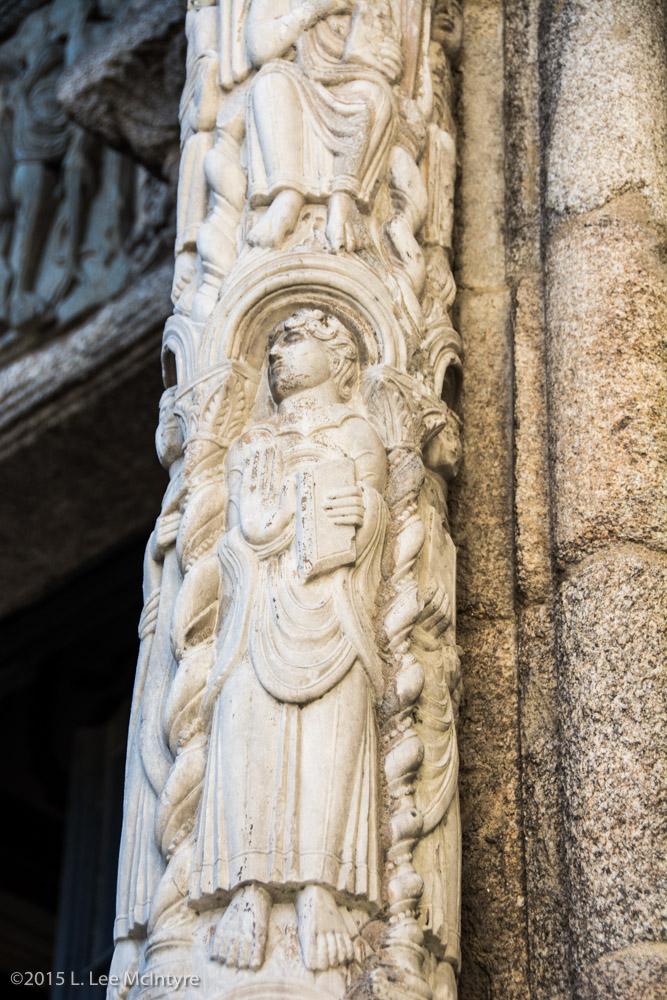
Santiago de Compostela Cathedral detail – photo #7
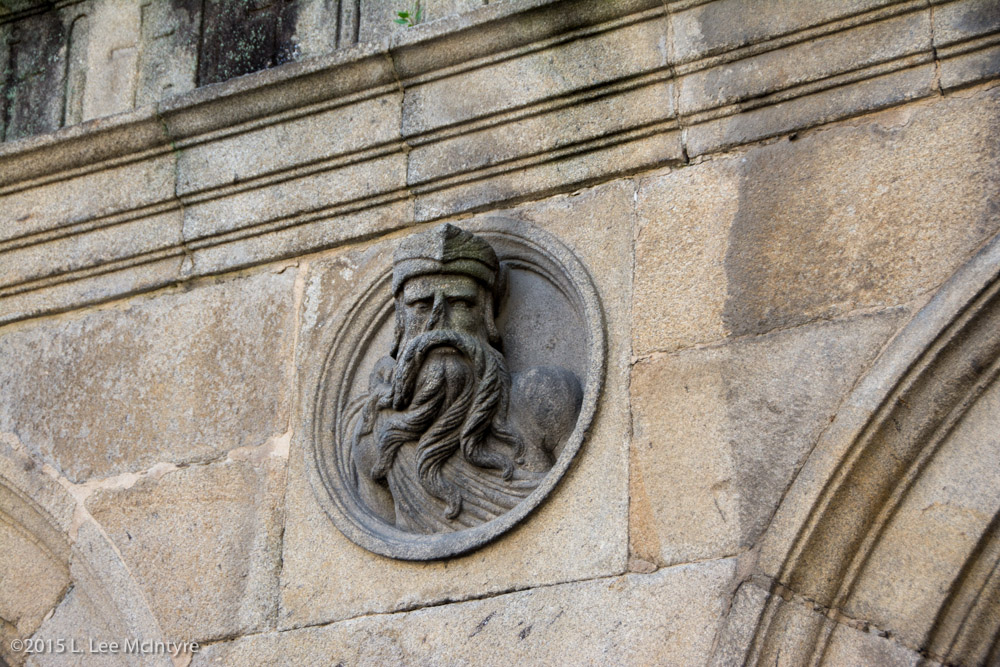
Santiago de Compostela Cathedral detail – photo #8

Santiago de Compostela Cathedral detail – photo #9
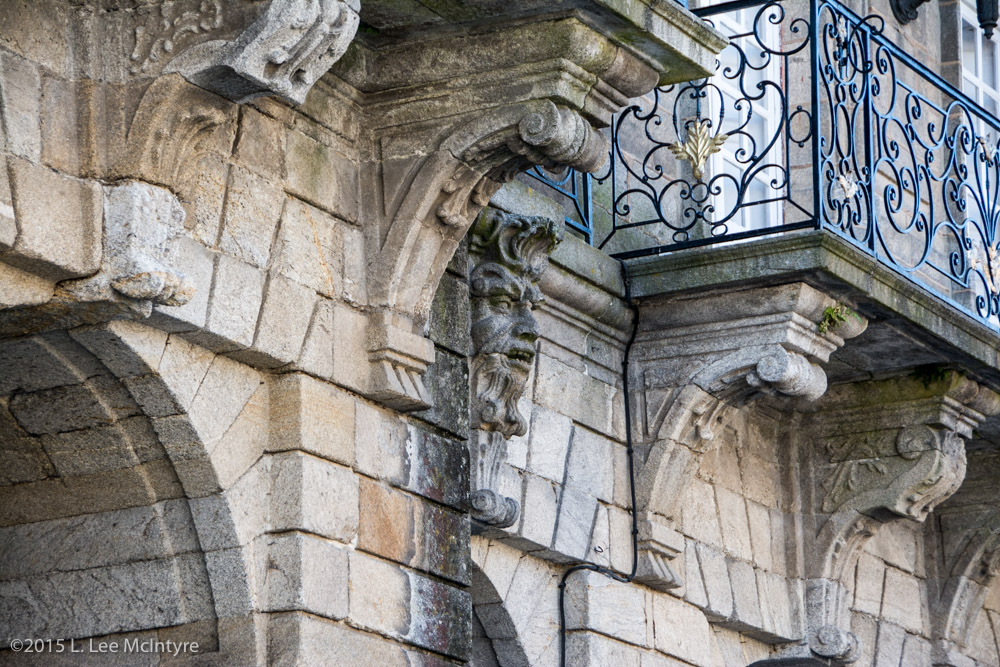
Santiago de Compostela Cathedral detail – photo #10